
It’s a second city that stands up when the first one sits down. When the office lights go out and the trains keep rolling anyway. When the clean people go home and the necessary people—doormen, drivers, bouncers, bartenders, cooks, dancers, late-shift nurses, security men with tired eyes—step into their uniforms like soldiers. The whole town changes hands without saying goodbye.
Big City doesn’t announce himself. That’s not his brand. He’s not the kind of man who needs to be seen to be effective. He needs to be known.
He’s in the mirror in a quiet room, the way men get when they’re not performing for anybody. Not preening. Not posing. Working.
He doesn’t “get dressed,” like a kid going out to impress strangers. He suits up the way a good mechanic lays out his tools—clean, simple, lethal in purpose. Solid colorways. Dark. Cool. No screaming labels, no goofy couture graffiti, no jewelry that jingles like a warning. Comfort with shape. Chic without begging for applause.
A clean black knit. An overshirt that hangs right. Pants that don’t balloon or cling—just correct. Shoes with soft authority, the kind that move quiet when they need to. He smells good in that way that doesn’t fill a room like cheap cologne. It sits close. Expensive. Understated. Like a sentence said once.
He checks his hands because, in New York City, hands tell the truth. His nails are manicured. Not glossy, not fancy—just cared for. A man’s hands in this city are either working, stealing, begging, or shaking yours as they mean it. He’s the kind you remember after the handshake ends.
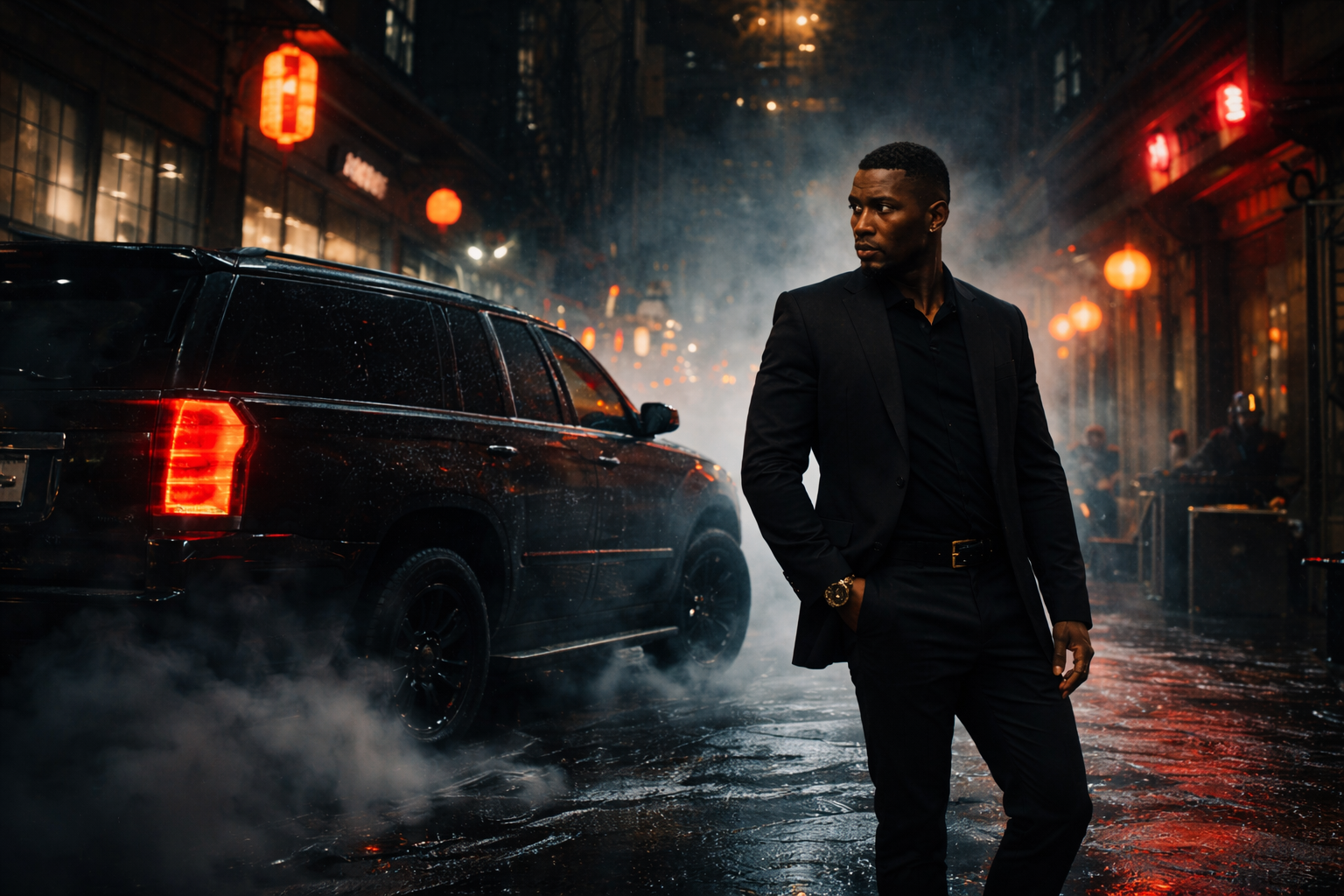
His skin is good. He’s got that steady glow you don’t get from luck. You get it from discipline, water, and not being sloppy with yourself. Husky build—thick through the shoulders, a firm barrel chest, a square jaw that makes people decide something about him before he even talks. Handsome Black man. Clean cut. Lighter brown eyes that are not hazel and never pretend to be. The eyes of a man who watches more than he speaks.
No chains. No circus. Just one watch—expensive, quiet—sitting on his wrist as it belongs there. Brushed gold pinky ring that’s a small dark planet: black stone, onyx-opal—whatever you want to call it. It doesn’t sparkle. It absorbs the light.
You don’t wear that ring to show off. You wear it like a signature.
Then he goes downstairs, where the real outfit is waiting: Black Betty.

A Yukon Denali Night Edition in the kind of black that looks like it has depth. Not paint. Not color. A decision. Smoke-black tints. High-grade black rims. Clean. Mean. A truck that doesn’t ask to be let in. It arrives like it already has a reservation.
The door seals with that soft, rich thud that tells you this machine was built for people who know what speed costs. Inside, it’s quiet luxury—dark surfaces, good stitching, no nonsense. He hits the start button, and the city’s late-night heartbeat answers back.
The Bose stereo comes alive with lo-fi rhythmic instrumentals—no lyrics, no drama, no voice telling you what to feel. Just steady percussion and warm loops, like a soundtrack for decisions. The music doesn’t lead. It follows him.
Outside, the night is cold the way New York gets cold—sharp, damp, and personal. The air carries that mix: exhaust, wet concrete, old steam pushing up from the street like the city’s breath. In the distance, a siren slides through the avenues and fades, like a reminder that the rules are always present, even when they’re not being used.
He pulls out, and the streets are already in their after-dark costumes.
The daytime in New York City is a place of errands and explanations. At night, New York City is a place of arrangements. You can feel it at red lights—cars idling too long, people appearing from nowhere and disappearing again, bodegas glowing like little lighthouses for the sleepless.
He moves through it like he’s always moved through it: unhurried, deliberate, as if the city belongs to him the way a neighborhood belongs to a man who’s walked it for twenty years.
And on nights like this, it kind of does.
Chinatown: The Back Streets That Don’t Smile
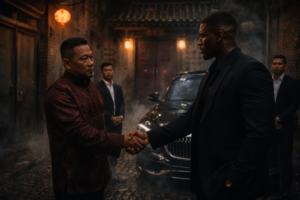
Chinatown after dark doesn’t put on a show for tourists. The bright parts are bright on purpose, and the dark parts are dark on purpose too. The sidewalks are damp. The light is thin. The alleyways look like they’ve seen everything and haven’t been impressed yet.
Big City doesn’t “go into an alley.” He arrives at a place that already knows he’s coming. That’s how this works in the night economy. The important doors don’t look important. The important men don’t wear signs.
He meets Wan Zheng—“the Red Dragon”—not in a movie way, not with operatic threats and theatrical monologues. In the real New York, the dangerous people don’t waste breath trying to convince you they’re dangerous. They’re busy.
The Red Dragon is calm. The calm of a man whose world is run on quiet leverage. He gives Big City a look that says: Things are moving. Things are being handled. Things don’t need to be loud.
Big City checks on “matters,” like men do. Not prying. Not gossiping. Just verifying that the machinery of the night is turning the way it’s supposed to.
There’s a language to it—half sentence, half silence. A glance at a phone. A nod that means yes, or no, or not yet. You don’t need names. Names are for people who want trouble to find them later.
Big City leaves the way he arrived: clean. No drama. No scene. Because the scene is for amateurs.
He gets back into Black Betty and the lo-fi beat folds around him again, like a suit you can’t see.
West Village: The Discreet Floors Above the Obvious City
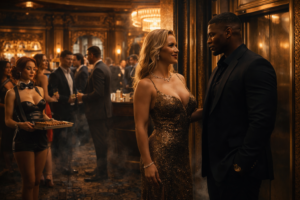
The West Village at night can look like romance—brownstones, warm windows, couples playing at being the only people alive. But that’s the front of it. New York has always been a city with layers. The wealthiest pleasures don’t happen in the brightest places. They happen in places that don’t want your attention.
A residential building—nice, quiet, respectable from the sidewalk—holds three top floors that don’t behave like the rest of the building. Those floors belong to a private world. An engineered hideaway. Lavish but controlled. Swanky without being desperate. The kind of place where everything is expensive, and nothing is accidental.
Francesca runs it. Italian. Blonde. The kind of woman you call a bombshell because you don’t have better words for a person who can smile and make a room rearrange itself. She’s business in heels. She doesn’t flirt like she needs anything. She flirts like she’s deciding whether you deserve a seat at the table.
Up there, the lighting is soft, curated. Furniture that looks like it came from Europe and never suffered an IKEA Allen wrench. The air smells like money and discretion—clean linen, faint perfume, good liquor poured without a show. The music is low. The conversations are lower.
This is where supermodel-working girls and wealthy financiers and their polished companions gather to negotiate future trysts and undisclosed locations the way corporate people negotiate mergers. Everything spoken in coded politeness. Everything is understood anyway.
Big City doesn’t leer. He doesn’t gawk. That’s not his lane. He’s trusted there because he understands the oldest rule of the discreet city:
Don’t make the beautiful place ugly with your hunger.
He walks through like he belongs, because he does. Francesca clocks him—watch, ring, posture, the clean lines of his clothes, the fact that he’s not trying to advertise anything—and she gives him the kind of acknowledgment reserved for men who keep their word.
The night economy is built on that: people who keep their word when it’s inconvenient.
He’s in and out, the way a reliable man moves through a world of unreliable appetites.
A Stop for Sal: The Old-World Business Hidden in Plain New York
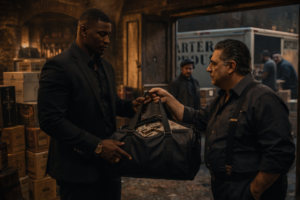
Then there’s Sal Minetti, and Sal’s place doesn’t need neon. It doesn’t need marketing. It doesn’t need Yelp reviews. It exists the way certain New York institutions exist: by reputation, by habit, by the fact that people keep coming back because the business does what it says it does.
Sal is old-school Italian—less talk, more stare. The kind of man who looks like he’s listening even when he’s not responding. Sal trusts Big City for the same reason people trust a good driver in the snow: he’s steady.
Sal has inventory that isn’t meant for bright shelves and cheerful receipts. Top shelf, black-market, the kind of stuff that ends up in glasses that cost more than rent, in rooms where nobody says the wrong thing twice.
Big City’s role is simple in concept and complicated in consequence: deliver the goods, collect the money, keep the peace. He’s trusted because he knows how to handle the stick-up cats—the impulsive little predators who think fear is a currency—and he knows how to handle cops too, because he understands the difference between noise and danger.
The amount floating through the night is heavy—big enough to make people nervous and greedy at the same time. And that’s why Big City is there. Because the night economy doesn’t just need charm. It needs stability.
“Everybody eats on this shift,” is what men like Sal say when they mean: Don’t get cute. Don’t get selfish. Don’t create chaos that brings daylight down on all of us.
Big City takes what he takes, confirms what needs confirming, and leaves.
No toast. No speeches. The night isn’t a party for him. It’s work.
Midtown: The City’s Glittery Mask
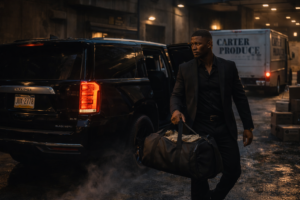
Midtown after midnight has a strange glamour. It’s bright in the wrong places. The clubs glow like aquariums filled with human desire. Lines form outside velvet ropes, and the people waiting pretend the waiting is part of the fun.
Inside, it’s all bass and perfume and money trying to look relaxed. The bartenders move fast, the bouncers move slow, and the people in the booths make eye contact like they’re bargaining with it.
Big City arrives and you can feel it before you see him. Not because he’s loud. Because the room quietly adjusts when a man like that enters. The staff clocks him. The hustlers clock him. The predators clock him. The people who don’t know anything just feel a change in the temperature and assume it’s the air conditioning.
He does what he came to do—clean, quick, professional. He doesn’t linger for compliments. He doesn’t soak in the attention. If someone tries to make a joke, he gives them the half-smile that says: Save it for somebody who needs it.
His presence is a kind of insurance policy. Not because he’s violent. Because he’s unshakable. In a city where everybody’s trying to be somebody, the dangerous men are often the ones who don’t have to try.
The Ride Between Places: The Real New York
What people forget is that the best part of a New York night isn’t the destination. It’s the travel between. The city in motion. The foggy, dim-lit streets. The steam curling out of grates. The traffic lights bouncing off wet asphalt. The endless little dramas—two men arguing quietly, a woman laughing too loud, a delivery guy pedaling like his life depends on it, a cabbie eating something from foil at the wheel like it’s normal.
Black Betty glides through all of it with the lo-fi beat keeping time.
And Big City—hands on the wheel, watch catching a hint of streetlight, ring dark as a promise—moves through his rounds like a man who knows the city’s secret schedule.
There’s a mystique to him, sure. But it isn’t the cartoon myth people love. It isn’t “gangster” like it’s a costume.
It’s something simpler and colder:
He is a man who understands that New York has two economies.
The one you see in daylight, with receipts and meetings and polite lies.
And the one after dark, where the city makes its real deals in whispers, handshakes, favors, fear, and trust.
Big City doesn’t brag about belonging to that second New York.
He just gets dressed, smells good, checks his hands, starts the engine, and goes to work.
Because last Saturday night in New York isn’t a night.
It’s a shift.
And Big City is always on the schedule.