
Every night has to end somewhere.
Even the nights that don’t want to.
For Big City, it doesn’t end with applause, or a last drink, or the fake sunrise glow of a club bathroom mirror. It ends uptown, past the noise, past the men still counting, past the engines cooling in alleys that never remember your name.
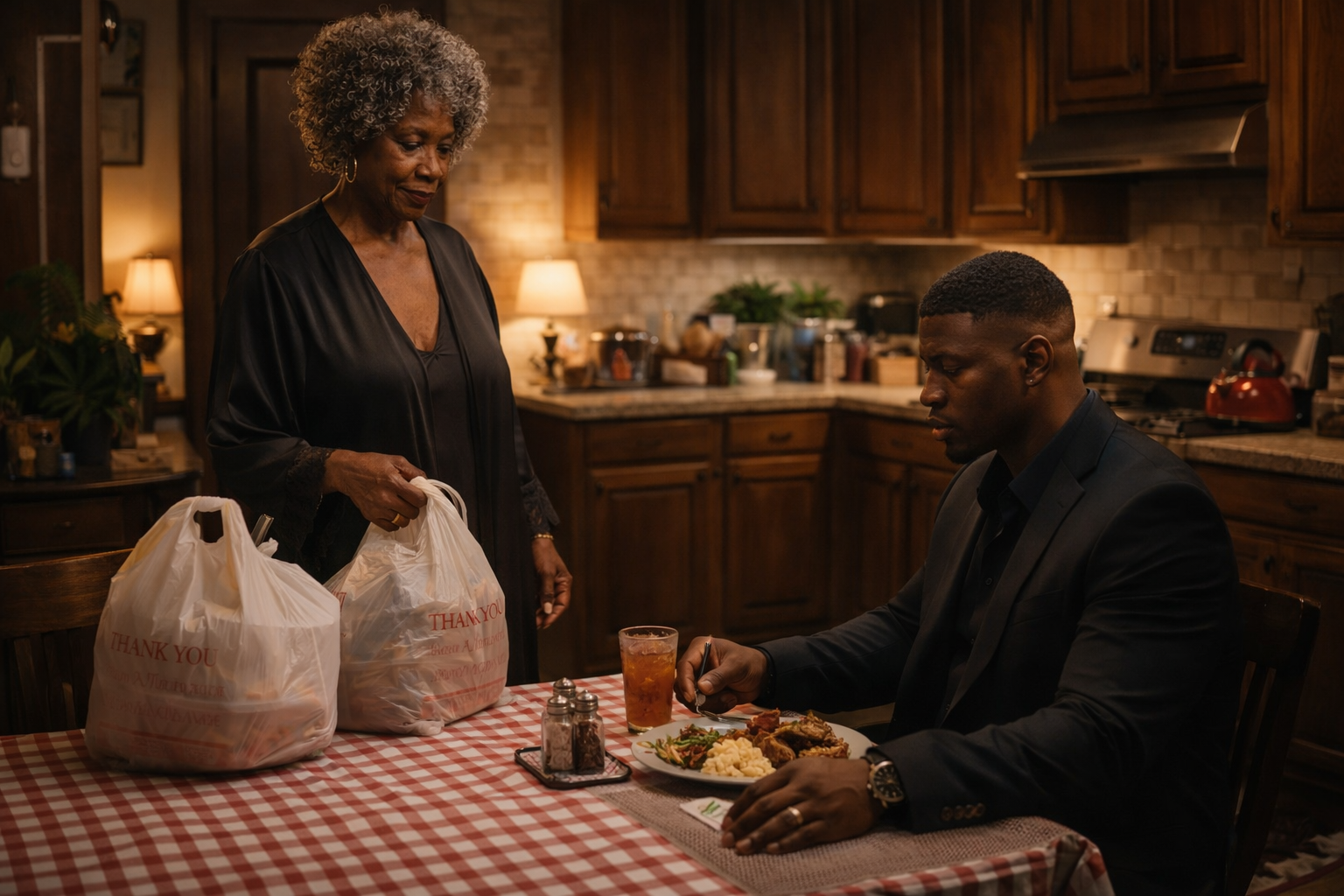
It ends at Mama Joyce’s Harlem brownstone kitchen.
That kitchen isn’t a hideout. It’s not a safe house in the movie sense. There are no locks added, no men posted at the door, no codes. What makes it safe is simpler and heavier than that: somebody is expecting him.
Mama Joyce doesn’t ask questions that don’t need answers. She doesn’t want details. She doesn’t need a report. She watches him walk in, clocks his face, his shoulders, the way the night sat on him, and that’s enough. If something was wrong, she’d know before he said hello. If something was right, she wouldn’t waste breath praising it.
She puts a plate down like it’s a ritual older than both of them. Real food. Food that grounds you. Food that reminds your body it’s still human. She sets the table for one—because this is the one place Big City doesn’t have to perform for anybody. No entourage. No witnesses. Just a chair, a fork, and the silence he’s earned.
And she always makes two to-go bags.
Not because she asks who they’re for.
Because the night always leaves somebody hungry.
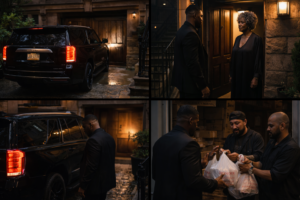
Mama Joyce is how Big City checks in with the world without inviting it all the way inside. She’s the quiet ledger. The living timestamp. If he doesn’t show, someone notices. If he’s late, someone waits. If he walks through that door, somebody knows he made it back in one piece.
There’s no judgment in that kitchen. No lectures. No moral accounting. Just presence. Just continuity. Just a woman who has seen every version of power come and go and knows that survival is the only résumé that matters.
Big City keeps his real family far from the night work on purpose. Love doesn’t need to know everything to be real. Some worlds don’t mix without breaking. He protects them by distance, by silence, by letting them believe in the daylight version of him.
But Mama Joyce?
She knows the whole man without needing the whole story.
And when Big City finally eats, when the noise drains out of his shoulders and the city loosens its grip, that’s when the night officially ends—not because the work is done, but because someone saw him come home.
In a city that takes more than it gives, that’s not a luxury.
That’s survival.